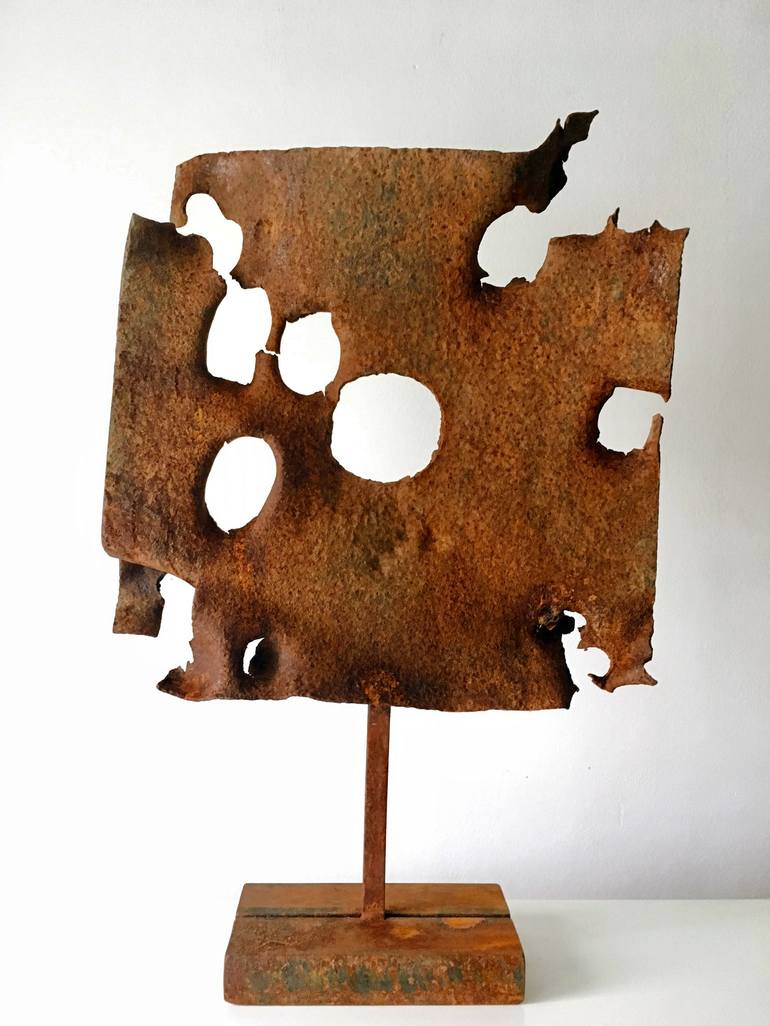
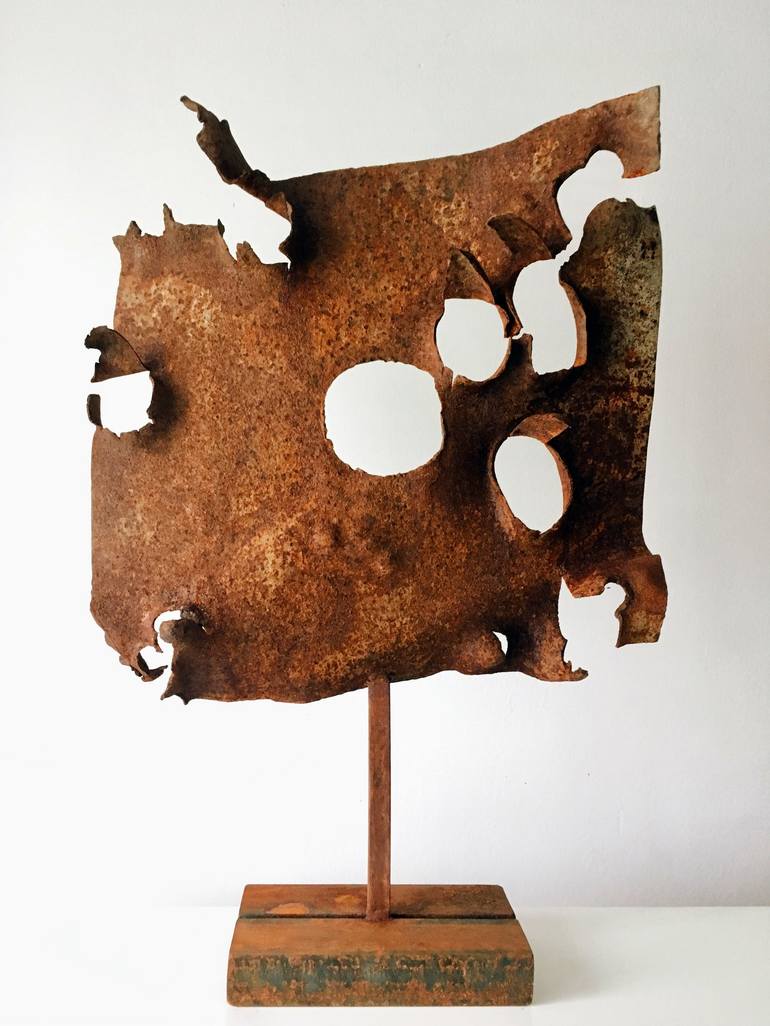
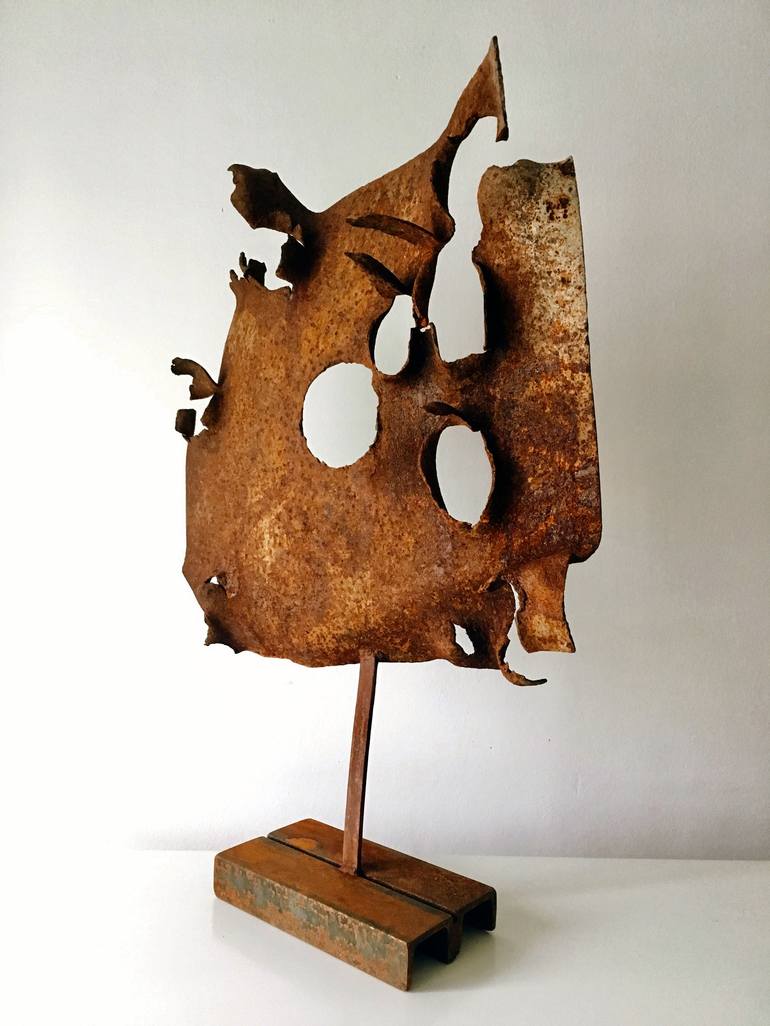
"Piroclasto II" Outdoor Sculpture
Sculpture, Metal
55 W x 50 H x 14 D cm
Ships in a Box
This work will ship flat in a sturdy, well-protected cardboard box. Read More
€4,403
Shipping Included
14-day satisfaction guarantee
Trustpilot Score
Artist Recognition
ABOUT THE ARTWORK
DETAILS AND DIMENSIONS
SHIPPING AND RETURNS
The concept of this sculpture has been developed by observing the effects of time on matter, the traces of human action and the processes of dissolution. I decided to isolate things from their original contexts and to assign them a new abstract artistic inspiration.
Year Created:
2017
Subject:
Method:
Method:
Sculpture, Metal
Rarity:
One-of-a-kind Artwork
Size:
55 W x 50 H x 14 D cm
Ready to Hang:
No
Mounting:
Free-Standing
Frame:
Not Framed
Authenticity:
Certificate is Included
Packaging:
Ships in a Box
Outdoor Safe:
Yes
Delivery Cost:
Shipping is included in price.
Delivery Time:
Typically 5-7 business days for domestic shipments, 10-14 business days for international shipments.
Returns:
14-day return policy. Visit our help section for more information.
Handling:
Ships in a box. Artists are responsible for packaging and adhering to Saatchi Art’s packaging guidelines.
Ships From:
Italy.
Customs:
Shipments from Italy may experience delays due to country's regulations for exporting valuable artworks.
Need more information?
Need more information?

Fabio Zanino builds an artistic language from one of the oldest human tensions: the desire to find order inside disorder. His practice begins with the recognition that time moves forward without pause, shaping every object it touches through weather, use, accident, and neglect. Rather than resisting that movement, he gathers its traces and gives them renewed visibility. Surfaces marked by rust, fading, abrasion, and erosion become evidence rather than damage. In his hands, discarded matter is not mute residue but a witness carrying memory. This attention to time places his work within a larger conversation about how societies value objects and how material histories survive after usefulness appears to end. He approaches sculpture as both observation and transformation, allowing viewers to consider what remains hidden in ordinary things. Through this method, he creates works that feel contemporary while also connected to enduring human habits of repair, adaptation, and reinvention. His art suggests that what seems exhausted may still contain fresh visual power and emotional resonance.
Central to Zanino’s process is cutting, a gesture he describes as simple yet essential. Through cutting, larger forms are reduced into elemental units, fragments that he treats like “reality pixels.” These pieces may first appear displaced or disconnected, but they are only in transition. Once separated from their original context, they become flexible components that can enter a new structure guided by intuition, balance, and visual rhythm. The result is neither collage nor mere reconstruction. It is a reorganization of lived matter into a different logic. This strategy allows him to preserve traces of the original object while changing its meaning entirely. A rusted panel, worn sign, or broken surface can become part of a refined composition that still remembers its earlier life. Such works ask viewers to look slowly, noticing how damage can become pattern and how fracture can become design. Zanino transforms the familiar by refusing to erase its scars.
His fascination with minimal units also reveals a broader philosophical position. Modern life often encourages speed, disposal, and replacement, yet his practice slows perception and rewards close attention. By breaking objects into smaller components, he asks what truly constitutes identity: is an object defined by function, by material, by memory, or by arrangement? The answer shifts within each sculpture.
Recognition:
Artist featured in a collection
Why Saatchi Art?
Thousands of
5-Star Reviews
We deliver world-class customer service to all of our art buyers.
Global Selection of Original Art
Explore an unparalleled artwork selection from around the world.
Satisfaction Guaranteed
Our 14-day satisfaction guarantee allows you to buy with confidence.
Support Emerging Artists
We pay our artists more on every sale than other galleries.