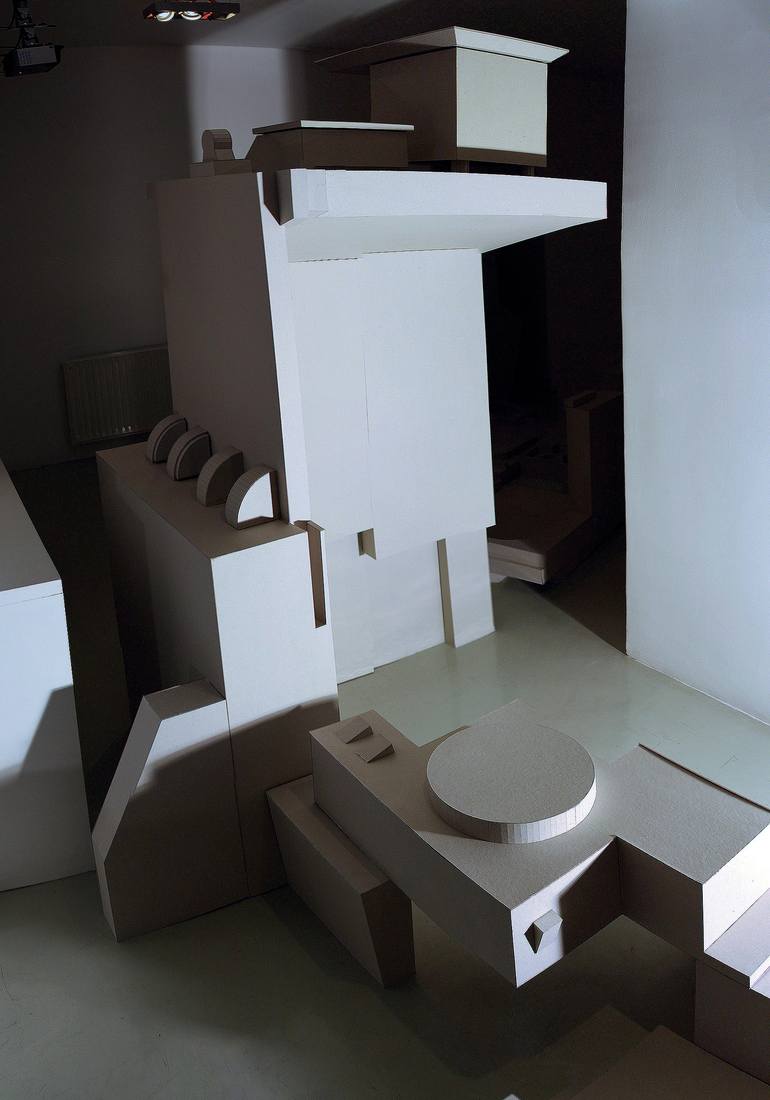
"BATALLA ESPACIAL, 2010-A" Sculpture
Sculpture, Other
0.4 W x 0.4 H x 1 D in
This artwork is not for sale.
ABOUT THE ARTWORK
DETAILS AND DIMENSIONS
SHIPPING AND RETURNS
Method:
Sculpture, Other
Rarity:
One-of-a-kind Artwork
Size:
0.4 W x 0.4 H x 1 D in
Ready to Hang:
No
Frame:
Not Framed
Authenticity:
Certificate is Included
Packaging:
Ships in a Box
Outdoor Safe:
No
Delivery Cost:
Shipping is included in price.
Delivery Time:
Typically 5-7 business days for domestic shipments, 10-14 business days for international shipments.
Returns:
Free returns within 14 days of delivery. Visit our help section for more information.
Need more information?
Need more information?

Ales Villegas was born in Quinta Normal (Santiago de Chile) in 1978 and grew up normal. She always wanted to fly in a gyroplane or live in an abandoned factory. From the time she was little she has wondered why people placed such importance on objects, thinking, of course, that people cannot live without objects. Objects make life simpler, or at least try to. She remembers the day when, unsure whether she was dreaming or awake, she found a place where objects went to die. It wasn't a cemetery, but a kind of limbo. And she has been wondering ever since why objects don't learn to die, why people don't take anything with them when they die, what the word is that describes the precise moment when the subject forgets the object. Typical questions of adolescence. She studied areas related to her interests, such as industrial design and architecture in the University of Chile, but she was expelled from both and condemned to ostracism. At that fateful moment she recalled two lessons: the first was how to use a utility knife and paperboard, and second, that no one could explain to her why people tend to just describe and classify. She read fragments of Benjamin, Foucault, Freud, and Baudrillard along with Bradbury, Moore, Ware, Calvino, and others. She began to visit museums, art galleries, attend film series, and frequent appliance stores. She learned fundamental concepts such as ontology, epistemology, or phrases such as "crisis of representation" and "crisis of being." She learned to converse with acquaintances from the art world and with strangers in the streets. But the answers still didn't come"”and the questions increased. One day she realized her true path (serendipity of being) and entered art school. She felt like Diogenes when he walked the streets of Greece, knowing above all that money could not buy what he needed. She collected paperboard, glue, and wood and made installations such as giant nails through the university's classrooms or a lock that closed all the doors. She built prototypes of multi-functional objects for lateral-thinking men, until finally, alone, she understood that the paperboard began to speak and live. Consumed and overwhelmed, like Vesalius among his object-cities constructed stories, utopia-uchronies and dystopias of worlds, potential habitats, the fantasy of objects, she theorized about the mercantile loneliness of being, the ontological denial of the species, mental hyper-textuality, the objectification of feelings.
Why Saatchi Art?
Thousands of
5-Star Reviews
We deliver world-class customer service to all of our art buyers.
Global Selection of Original Art
Explore an unparalleled artwork selection from around the world.
Satisfaction Guaranteed
Our 14-day satisfaction guarantee allows you to buy with confidence.
Support Emerging Artists
We pay our artists more on every sale than other galleries.