79 Views
2
View In My Room
Printmaking, Lithograph on Paper
Size: 19.7 W x 39.4 H x 0.1 D in
79 Views
2
ABOUT THE ARTWORK
DETAILS AND DIMENSIONS
SHIPPING AND RETURNS
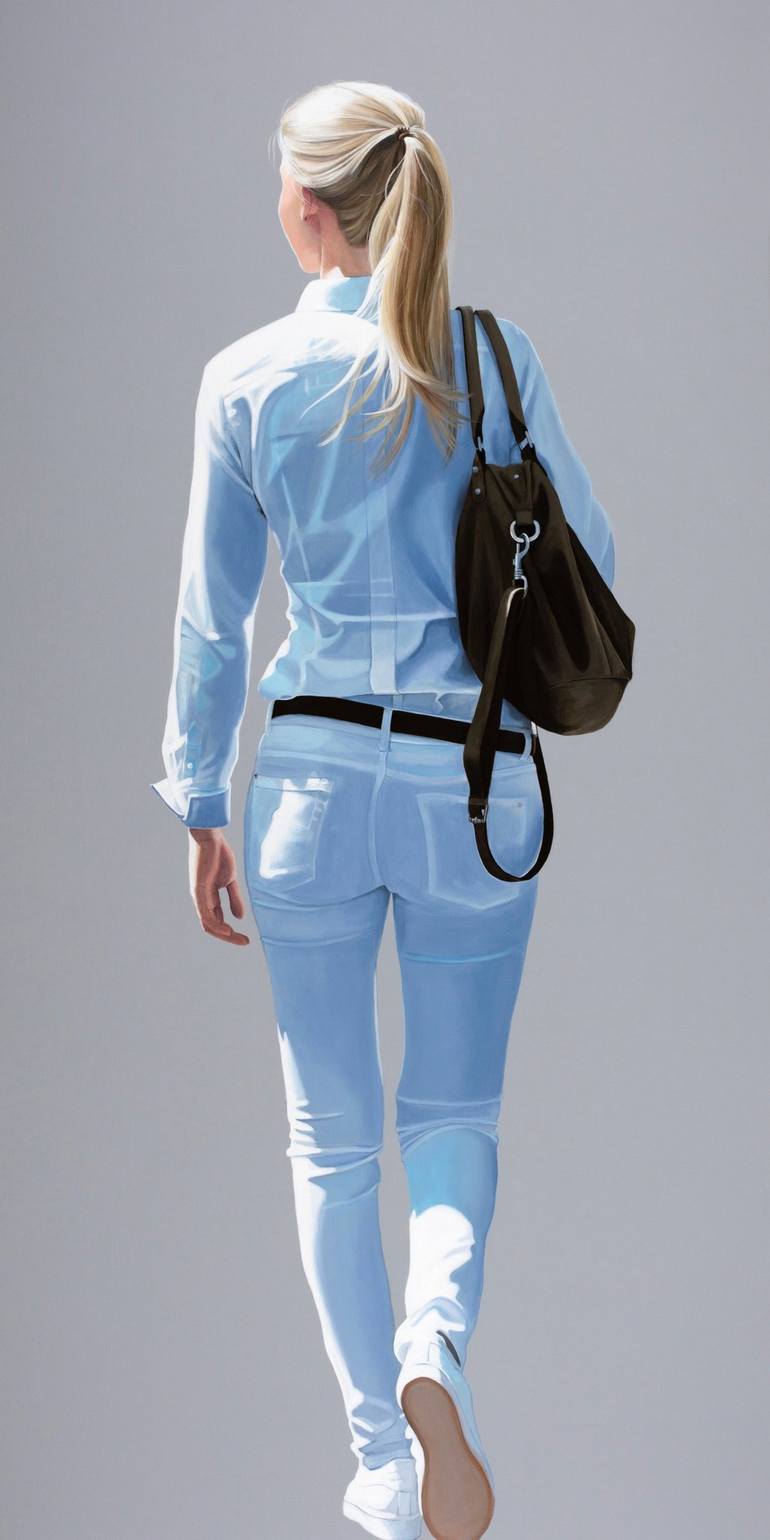
My subject is the human figure, from behind, walking away from the viewer. You never see the face. You can only guess at who it is turning away so independently. From the way they walk or stand, one can only conclude that they are self-confident and know where they are going. Seeing the figure from ...
Year Created:
2017
Subject:
Styles:
Mediums:
Mediums:
Printmaking, Lithograph on Paper
Rarity:
One-of-a-kind Artwork
Size:
19.7 W x 39.4 H x 0.1 D in
Ready to Hang:
No
Frame:
Not Framed
Authenticity:
Certificate is Included
Packaging:
Ships in a Box
Outdoor Safe:
No
Delivery Cost:
Shipping is included in price.
Delivery Time:
Typically 5-7 business days for domestic shipments, 10-14 business days for international shipments.
Returns:
Free returns within 14 days of delivery. Visit our help section for more information.
Need more information?
Need more information?

Sabine Liebchen
Germany
The Magic of the Moment "Though we know of the invisible, i.e. assume its existence with some certainty, we can only depict an allegory that stand for the invisible that it is not." This is a quotation of Gerhard Richter, perhaps the most significant of contemporary artists. Understanding Sabine Liebchen's hyperreal paintings, which are apparently so clearly fixed in the here and now, as an "allegory for the invisible" - such a claim may at first be rather daring. However, those who are involved more closely with art, its signs, symbols and levels of meaning, already know just how often first appearances are deceiving. So, just what are these first appearances telling us in Sabine Liebchen's figurative and cool and elegant paintings? Initially, we perceive contemporary characters, obviously in the art of leisure. A young blond woman out shopping on her mobile, a woman walking on the beach - her light summer shoes in her hand, another young woman - seemingly waiting, a woman out jogging. The portfolio appears to be explicit and clear, but closer reflection and analysis give way to various levels of meaning. The paintings endorse this - they are open to interpretation and invite the observer and his fantasy to dialogue. It is striking that Sabine Liebchen's figures are portrayed almost exclusively from behind. These figures, obviously enjoying their leisure time, remain anonymous. Their faces are not identifiable and thus indefinable as individuals. Sabine Liebchen's figures can be conceived as symbolic figures, similar to Caspar David Friedrich`s (1774-1840) rear view figures standing representatively, depicting typical behaviour in consumerism and leisure. They could almost be described as the "allegories of leisure". Closer contemplation of these light, airy scenes shows that the painter has eliminated all needless details, i.e. she has concentrated on the essential, omitting the incidental. In short: She abstracts. Abstrahere (abstractum) literally means "to detract, "to pull away". An artist working in the abstract tries to separate the random from the general or essential (by abstraction or "detracting"). Photography, if you like, also abstracts because it does not give us "congruent" images of reality. Photo realists conveyed this intricate perception by projecting and copying colour photos on huge canvasses.
Why Saatchi Art?
Thousands of
5-Star Reviews
We deliver world-class customer service to all of our art buyers.
Global Selection of Original Art
Explore an unparalleled artwork selection from around the world.
Satisfaction Guaranteed
Our 14-day satisfaction guarantee allows you to buy with confidence.
Support Emerging Artists
We pay our artists more on every sale than other galleries.