28 Views
0
View In My Room
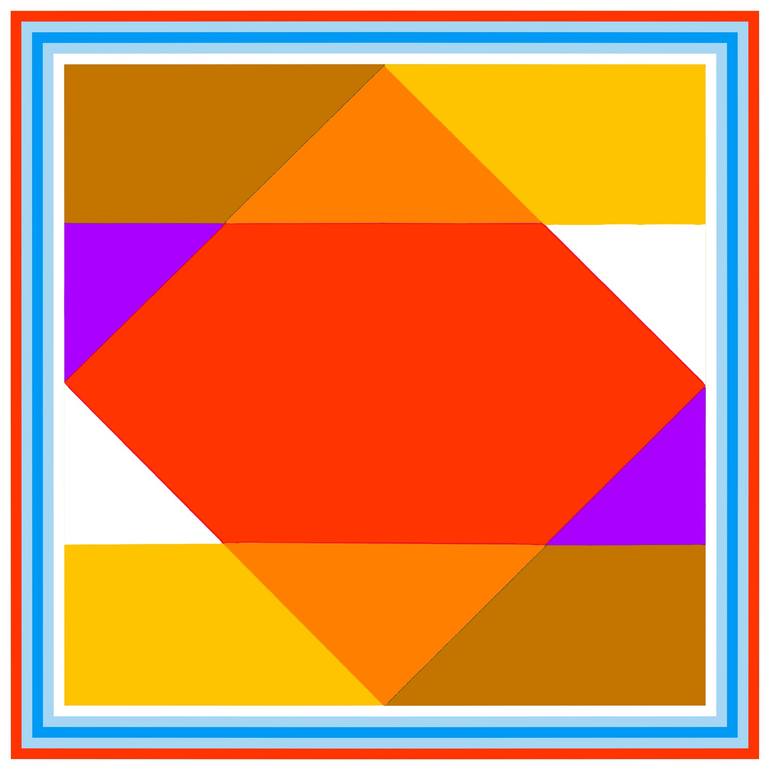
Printmaking, Digital on Other
Size: 29.9 W x 29.9 H x 0.1 D in
Ships in a Tube
$586
Shipping included
Trustpilot Score
28 Views
0
ABOUT THE ARTWORK
DETAILS AND DIMENSIONS
SHIPPING AND RETURNS
Concrete art is often composed of basic visual features such as planes, colors, and forms."Sentiment" tends to be absent from concrete art. The "hand" of the artist may be difficult to detect in finished works of concrete art; concrete art may appear, in some instances, to have been made by a machin...
Year Created:
2018
Subject:
Styles:
Mediums:
Print, Digital on Other
Rarity:
Limited Edition of 50
Size:
29.9 W x 29.9 H x 0.1 D in
Ready to Hang:
No
Frame:
Not Framed
Authenticity:
Certificate is Included
Packaging:
Ships Rolled in a Tube
Delivery Cost:
Shipping is included in price.
Delivery Time:
Typically 5-7 business days for domestic shipments, 10-14 business days for international shipments.
Returns:
The purchase of photography and limited edition artworks as shipped by the artist is final sale.
Handling:
Ships rolled in a tube. Artists are responsible for packaging and adhering to Saatchi Art’s packaging guidelines.
Ships From:
New Zealand.
Need more information?
Need more information?

David Jardine
New Zealand
This gallery has been formed to make available the works of David, where he is uses digital technology to create and refine a series of images which have been the subject of his work for over 30 years. The digital images presented here show his abstract "concrete" work. Born in Scotland in 1963 his art has been influenced and inspired by the patterned art works found in his country of birth, and by 15 years spent in South Africa, and 20 years in New Zealand where he now lives and works. Sir Isaac Newton abstracted the first color wheel in 1666 from a single point of light. This construct consisted of the colors red, orange, yellow, green, blue, indigo, and violet. Concrete art is an art movement with a strong emphasis on abstraction. The artist Theo van Doesburg, closely associated with the De Stijl art movement, coined the term "concrete art" as he in 1930 founded the group Art Concret and articulated its features in a manifesto titled "The Basis of Concrete Art", signed by four other artists of the group, including Otto G. Carlsund, Jean Hélion and Leon Tutundjian. The manifesto explained that the resultant art should be non-referential insofar as its components should not refer to, or allude to, the entities normally encountered in the natural, visible world. This is a distinction from abstraction generally. In a more general sense "abstract art" could and often does include the "abstraction of forms in nature". But "concrete art" was intended to emanate "directly from the mind" and consequently to be more "cerebral" than abstract art generally. Concrete art is often composed of basic visual features such as planes, colors, and forms."Sentiment" tends to be absent from concrete art. The "hand" of the artist may be difficult to detect in finished works of concrete art; concrete art may appear, in some instances, to have been made by a machine. Concrete art often has a core visual reference to geometry whereas more general abstract art may find its basis in the components of the natural world. These works attempt to fuse these two concepts. The grey concrete of the mind is used to reflect the bright spectrum of the natural world. The resulting constructs offer alternative views of the visual spectrum. The high quality canvas prints being offered here are endorsed by the artist, however exhibitions still remain the best arena for presentation of this theme, and towards this end, sponsorship for these events is continually being sought.
Why Saatchi Art?
Thousands of
5-Star Reviews
We deliver world-class customer service to all of our art buyers.
Global Selection of Original Art
Explore an unparalleled artwork selection from around the world.
Satisfaction Guaranteed
Our 14-day satisfaction guarantee allows you to buy with confidence.
Support Emerging Artists
We pay our artists more on every sale than other galleries.