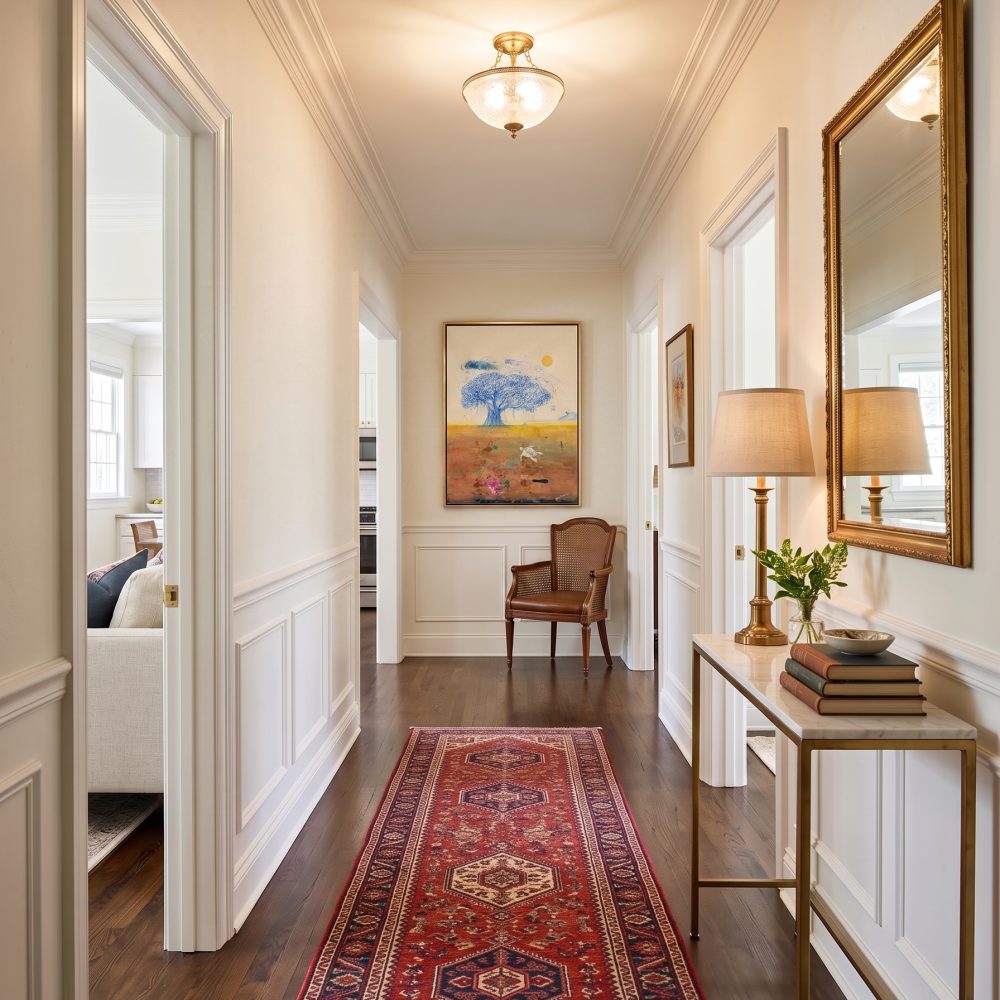
Original Art Versus Prints & Wall Decor
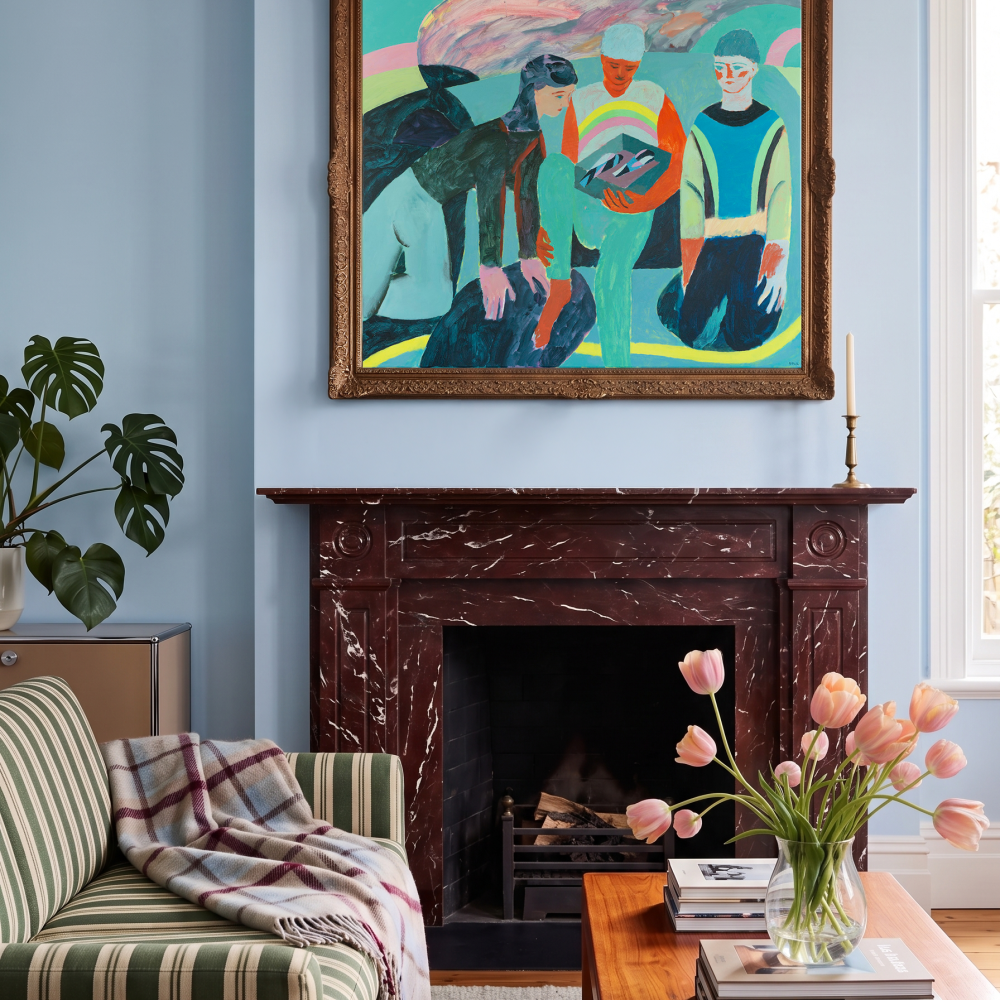
Not all wall decor does the same job. A wall art print from West Elm may fill a wall, but only a one-of-a-kind artwork can fill it personally. Knowing how original art stacks up against all the other options you could place on the wall will help you make the decision that’s right for your space.
Here are a few wall decor ideas for your home, and what you gain by choosing one over another.
Original Art vs. Family Photos and Personal Keepsakes
This one isn’t a competition, but it’s worth addressing because it’s a comparison many people quietly make when they look at a blank wall.
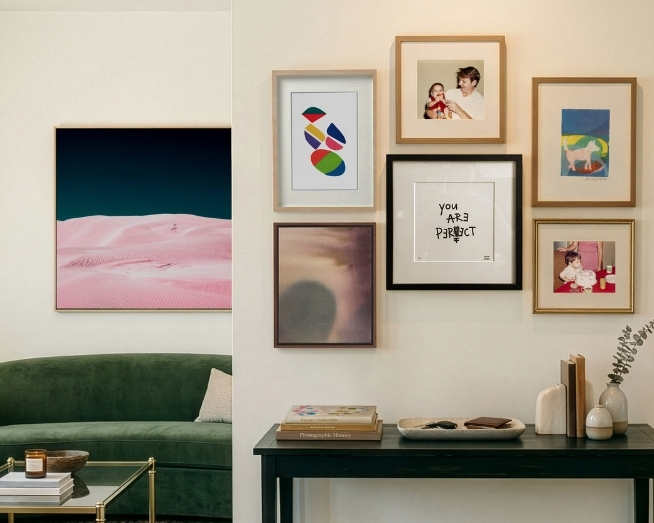
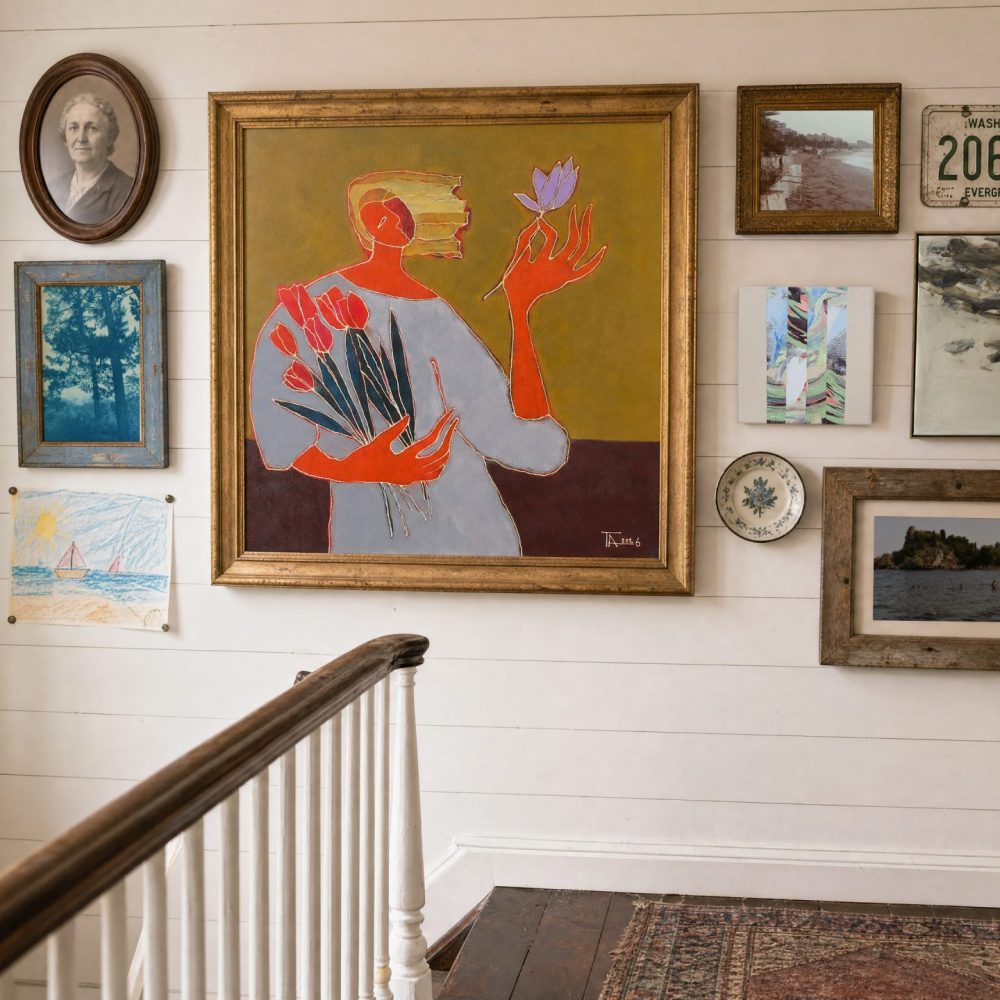
Family photos and personal keepsakes tell your story—the people, places, and moments that matter to you. Original art does that, too. A piece that takes you back to a trip of a lifetime, a commission that captures someone you love, or a work that reminds you of a specific time in your life. Art carries memory and meaning as much as any memento. Where art goes further is in being an anchor for your personal collection. A single strong painting gives your photos and objects a visual center.
The question is not choosing between art and family photos, but rather about adding art to your home that ties together all the things you love.
Original Art vs. Mass-Produced Prints
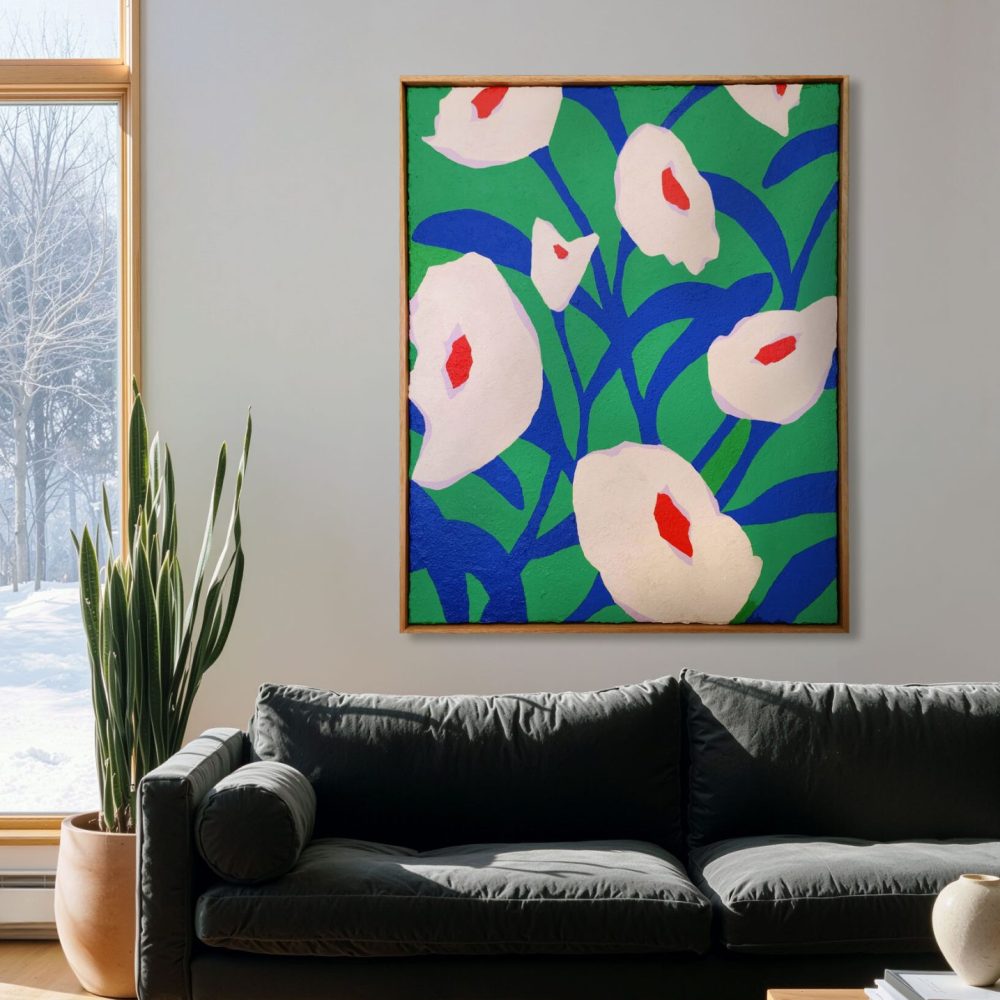
A canvas or photographic print is what people most readily consider as an alternative to one-of-a-kind art. It may seem easier to acquire, but it is anonymous. A print from a design retailer runs $200–$600, and the same image exists in thousands of other homes. An original from an emerging artist starts in the same range, and what you get is categorically different. One-of-a-kind, made by hand, by a working artist whose practice you’re directly supporting. Plus, it’s an object that only exists once, meaning you won’t find it in any other home.
Limited edition prints occupy the closest position to original art: finite run, artist involvement, and some collector value. The argument for the original over a limited-edition print is its singularity. A print is one of fifty, not one of one. The physical presence of the original object and the evidence of the artist’s hand can’t be reproduced in print, no matter the quality.
Original Art vs. Vintage and Secondhand Finds
Vintage finds—botanical prints, old maps, antique paintings sourced from flea markets and estate sales—have the unique story you may look for from original art. For decorators who prioritize sustainability and mindful consumption, secondhand may also feel like the more ethical choice. There’s also the financial, which assumes that getting something secondhand may make it more affordable.
In this case, the distinction from buying contemporary original art isn’t quality or singularity. Buying from a living artist adds something to the story: a connection to someone still making work, a practice you can follow, and a career your purchase directly sustains.
On the sustainability question: buying directly from a living artist is one of the most mindful consumption decisions you can make. There’s no mass production or supply chain. The object is unique and made to last, and goes directly from the person who made it to the person who lives with it. Many artists now also use eco-conscious materials in their work.
As for the financial factor, vintage isn’t always the bargain it appears to be. A well-sourced piece in a good frame can easily reach thousands of dollars, especially if you’re looking at antique oil paintings or works with provenance.
Original Art vs. Wallpaper and Wall Murals
Wallpaper and murals make a statement. But they’re a different kind of commitment than art, and it’s worth understanding what you’re signing up for.
A wall mural can be a one-of-a-kind decor choice, but it’s an expensive and disruptive decision to undo. Original art doesn’t work that way. A piece you love deepens over time rather than aging out. And if you move, it comes with you.
If you’re considering wallpaper, you have to be mindful that patterns date. What feels fresh now can feel tired in under a decade. There’s also the question of what happens when you want the room to evolve. With wallpaper, you’re committed. With originals, you can move a piece to a different wall, room, or home. The investment stays with you rather than disappearing into the walls.
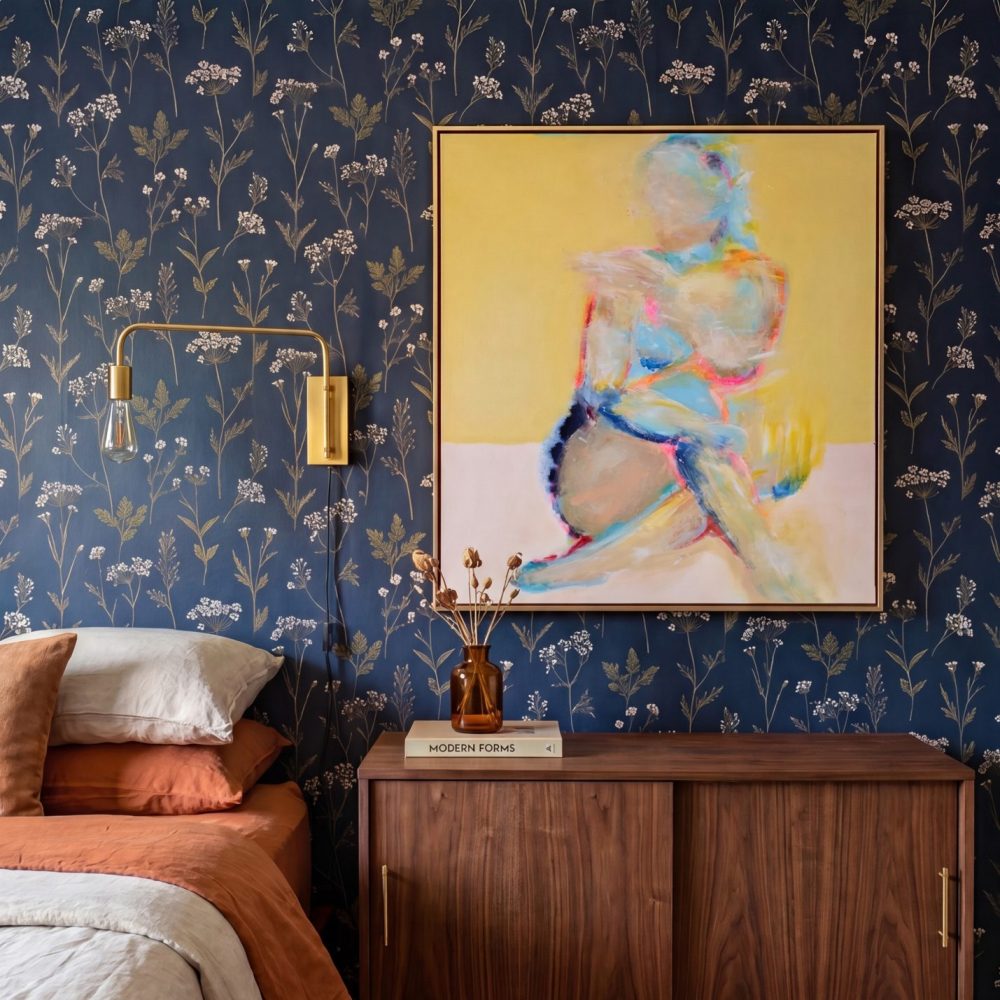
That said, wallpaper and original art aren’t always competing for the same job. Some of the strongest rooms have both. A bold wallpaper pattern behind a calming abstract painting gives the room both a mood and a point of view.
Original Art vs. Mirrors
In the right spot, a mirror expands space and amplifies light. For a narrow hallway or a dark corner, mirrors can work well. But a piece of original art can do more of that work than most people realize.
A large landscape with an open sky creates a sense of depth that draws the eye outward, making a room feel bigger than it is. A color field abstract in warm yellows or soft whites can reflect light throughout the room. A painting with significant negative space can open up a wall in the same way a mirror does. In most rooms, you can have both. But if the choice is between a mirror and a painting that does the same spatial work, the painting gives you more personality and visual interest.