

0
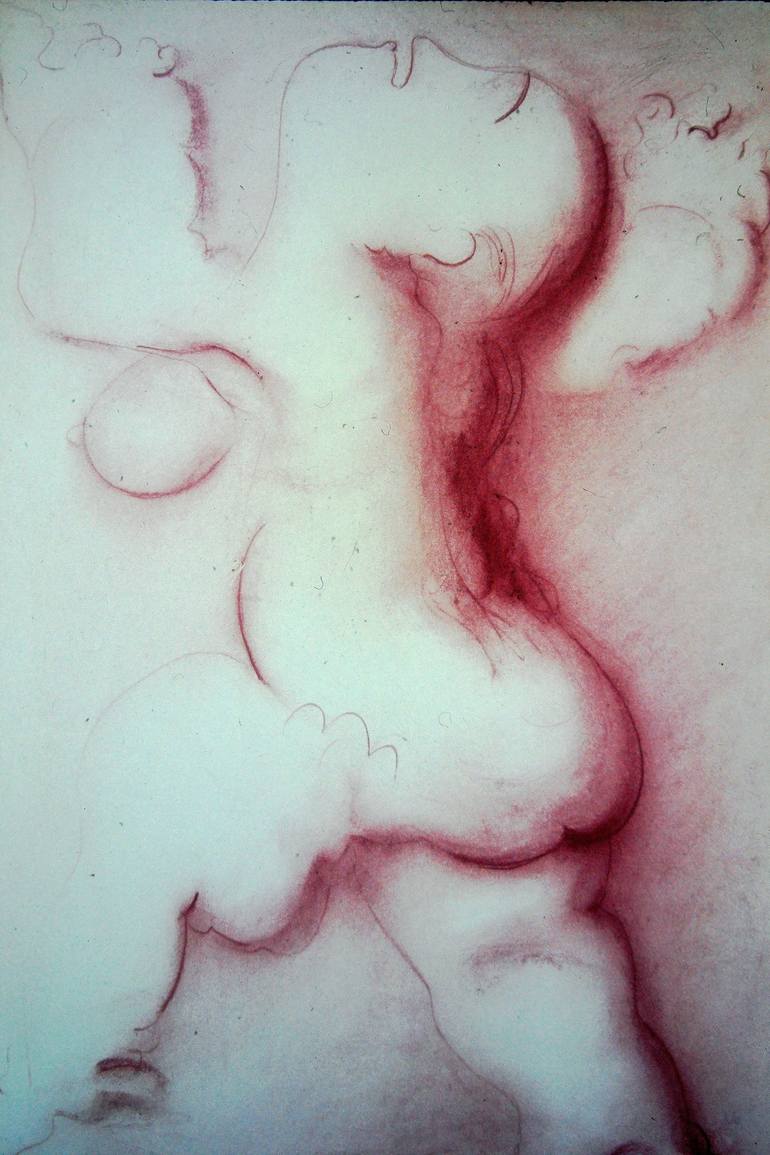
"Sibilla Rosa" Fine Art Print
$129
Material
- Archival acid-free canvas
- Laminated with protective lustre surface
- Hand-stretched over 100% renewable solid pine stretcher bars, 1.25" thick
Size
Select a Canvas Wrap
Frame
Archival-grade Materials
Fade-resistant Inks
Professionally Printed
ABOUT THE ARTWORK
DETAILS AND DIMENSIONS
SHIPPING AND RETURNS
This artwork by Ruggero Falanga, titled "Sibilla Rosa," is from his Milanese period during his time at Brera. Created in 1968, it belongs to the "Santoni, Sibille, Nudi" series, dedicated to Santoni. The piece, measuring 50x75 cm, is executed in pink charcoal on paper, showcasing Falanga’s skillful ...
Year Created:
1974
Subject:
Styles:
Medium:
Print, Giclee on Canvas
Rarity:
Open Edition
Size:
14 W x 21 H x 1.25 D in
Ready to Hang:
Yes
Frame:
Not Framed
Canvas Wrap:
Black Canvas
Packaging:
Ships in a Box
Delivery Cost:
Calculated at checkout.
Delivery Time:
Typically 5-7 business days for domestic shipments, 10-14 business days for international shipments.
Returns:
All Open Edition prints are final sale items and ineligible for returns. Visit our help section for more information.
Handling:
Ships in a box. Art prints are packaged and shipped by our printing partner.
Ships From:
Printing facility in California.
Need more information?
Need more information?

Ruggero Falanga was born in Taormina on 3rd December, 1914, in a modest Southern family. Soon after Ruggero’s birth his father had migrated to the United States to seek his fortune there, but had no luck. He was to return only after the end of World War II, following a mining accident. His father’s departure placed the burden of the family on the shoulders of his mother. She earned money as an embroideress – an art at which she excelled – but it was hardly remunerative. Despite all kinds of difficulties and in the face of gossip, Ruggero’s mother, in a firm, poised and serene manner, managed to preserve the peace and reputation of her family. Ruggero worshipped her and it was to her that he was to turn for inspiration. The cycle of the “maternities” was to be one of the most important periods of his production. At his mother’s death in 1961, we was overcome with grief. He felt in a barren world – his father having died the previous year – and his outlook on life became even more disconsolate and dramatic. It was to be in that period that his art would reach the depths of exasperation; black became the dominant colour. The walls of his studio were entirely covered with images of grief, with human larvae, the symbol of existential lonliness. Falanga turned down an excellent job as a cloth designer for a fashion firm, a kind of work that he was extremely good at. Soon afterwards, he turned down another job in the film industry, which his friend and pupil, Gatti, had got for him. He even refused an offer the offer to paint the murals for a new church at Sestriere, a popular winter resort. He had thrown away a fortune to embark on an ascetic, penurious life; he had left behind the pragmatic world of money. In his Turin studio – right in the middle of the industrial capital of the north – he relives myth of his ancient Taormina, its freedom, its colours, its vitality. He lives in the heroic world of the Greek metope. In 1947 his representational phase inspired by the ancient mediterranean world, is over; Falanga moves on the abstract expressionism and tries out ever new ways. He exhausted himself and his themes, as well as using up huge quantities of artists materials. “I worked from Saturday at 9.30 pm until Monday morning non-stop. I cannot understand how I could be a slave to a kind of work that makes my head and even my body spin! I am unsatisfied over and over again.
Why Saatchi Art?
Thousands of
5-Star Reviews
We deliver world-class customer service to all of our art buyers.
Global Selection of Original Art
Explore an unparalleled artwork selection from around the world.
Satisfaction Guaranteed
Our 14-day satisfaction guarantee allows you to buy with confidence.
Support Emerging Artists
We pay our artists more on every sale than other galleries.