Art for the Bedroom
The bedroom is the one room in the home you don’t arrange for anyone else. It is entirely yours, shaped around how you recharge and the quiet hours on either side of sleep. That privacy is exactly what makes the art here feel so personal. Here, art becomes an extension of your sanctuary, reminding you of what grounds you or helping you clear your mind.
Choosing the right art gets easier once you understand a few things: where art naturally lives in a bedroom, how scale behaves in a more intimate room, and which kinds of imagery support rest.
Where to Place Art in the Bedroom
A handful of spots work well for art in a bedroom. Discover three of the most common placements our art advisors recommend.
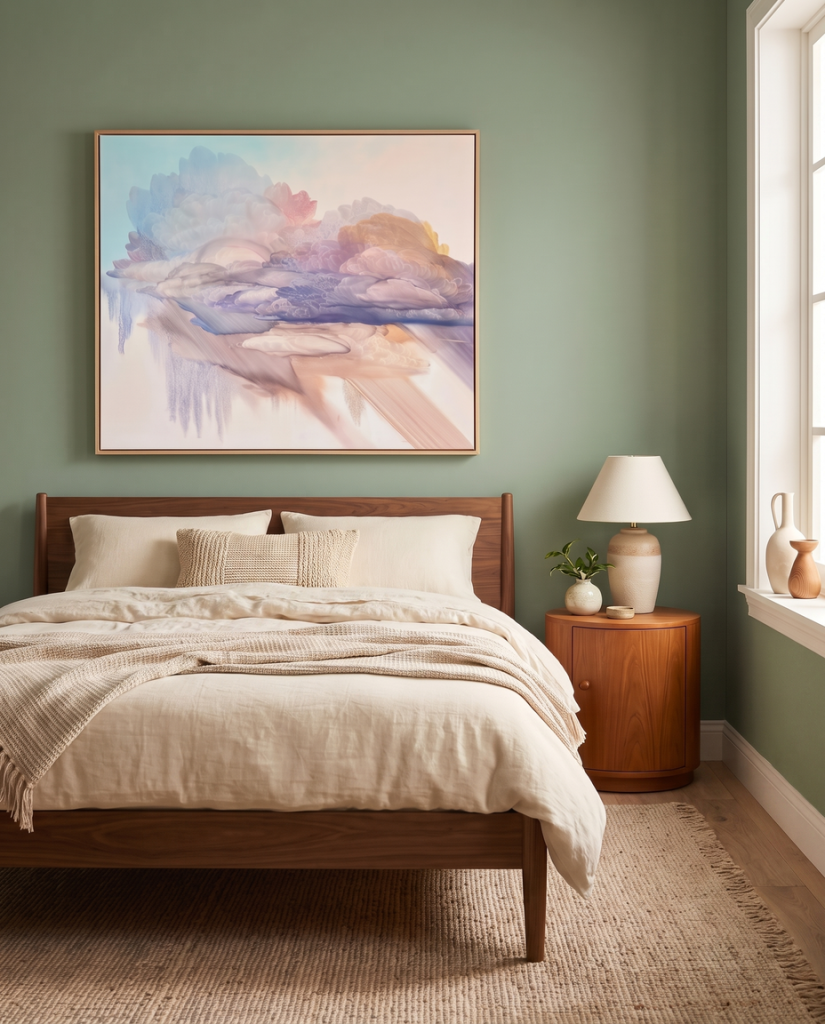
Above the Bed
The wall above the bed is the room’s natural anchor. Usually, it’s the largest uninterrupted stretch of wall, and the first thing the eye lands on when you walk in. Whatever goes here sets the tone for the whole room.
Because it anchors the space, this is a placement for art with a steady, atmospheric presence: calm, expansive, visually quiet, that holds the same mood whether the room is full of morning light or lit by a single lamp.
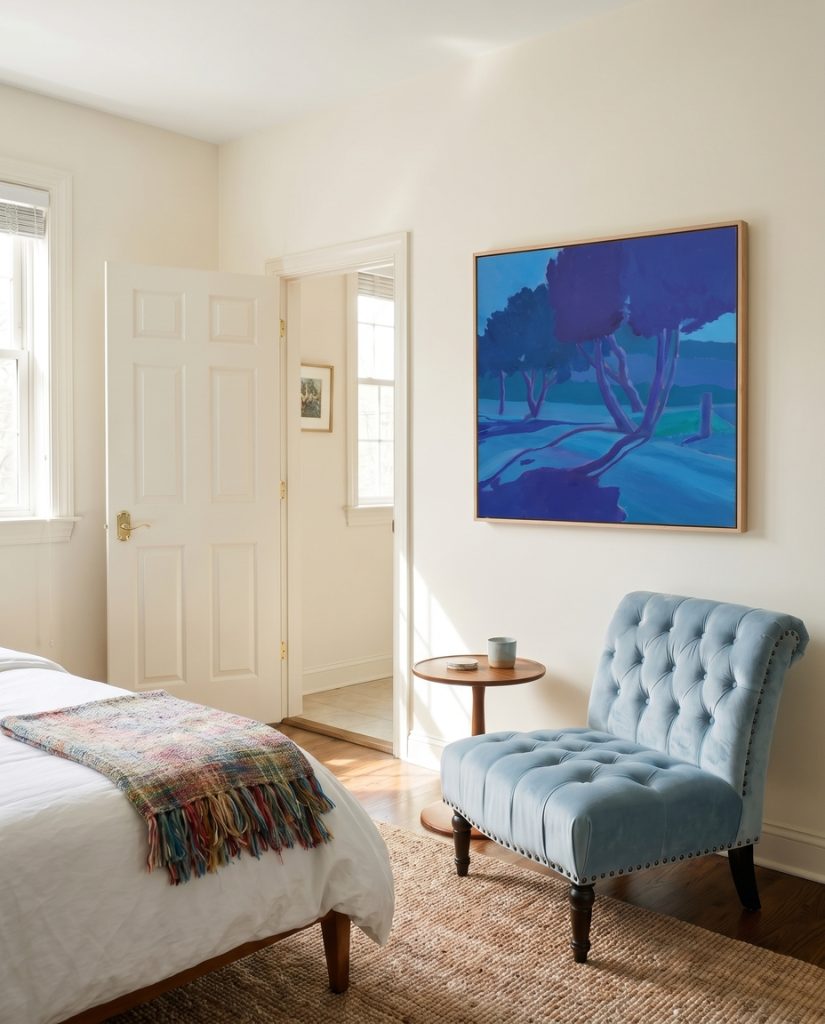
Opposite the Bed
This is the wall you experience most directly—what you see when you wake up and as you go to bed. It is a focal point that sets the tone of your day.
Works here are often read at a distance and in passing, which makes them well-suited to soft landscapes, restrained abstraction, or photography with a calm visual rhythm.
In many bedrooms, this wall may also house functional elements such as storage or a television. Even so, art can still help soften the visual field and bring a sense of cohesion to the room.
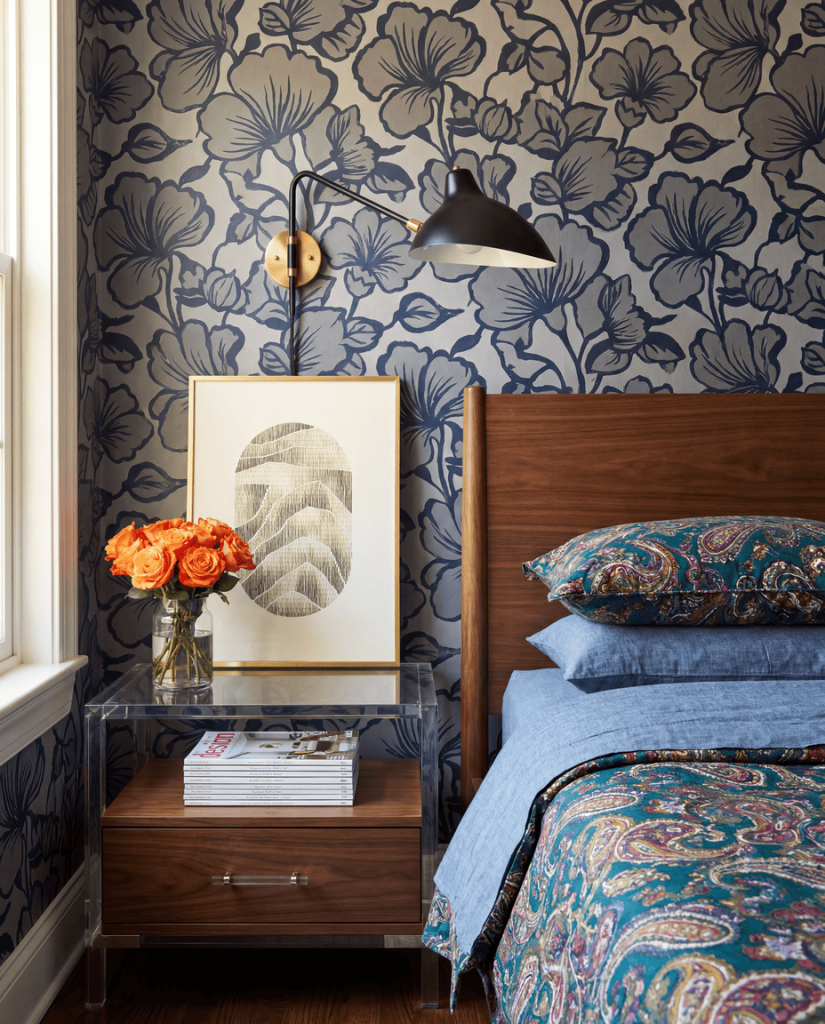
Nightstand and Dresser
These are the most intimate art placements in the bedroom.
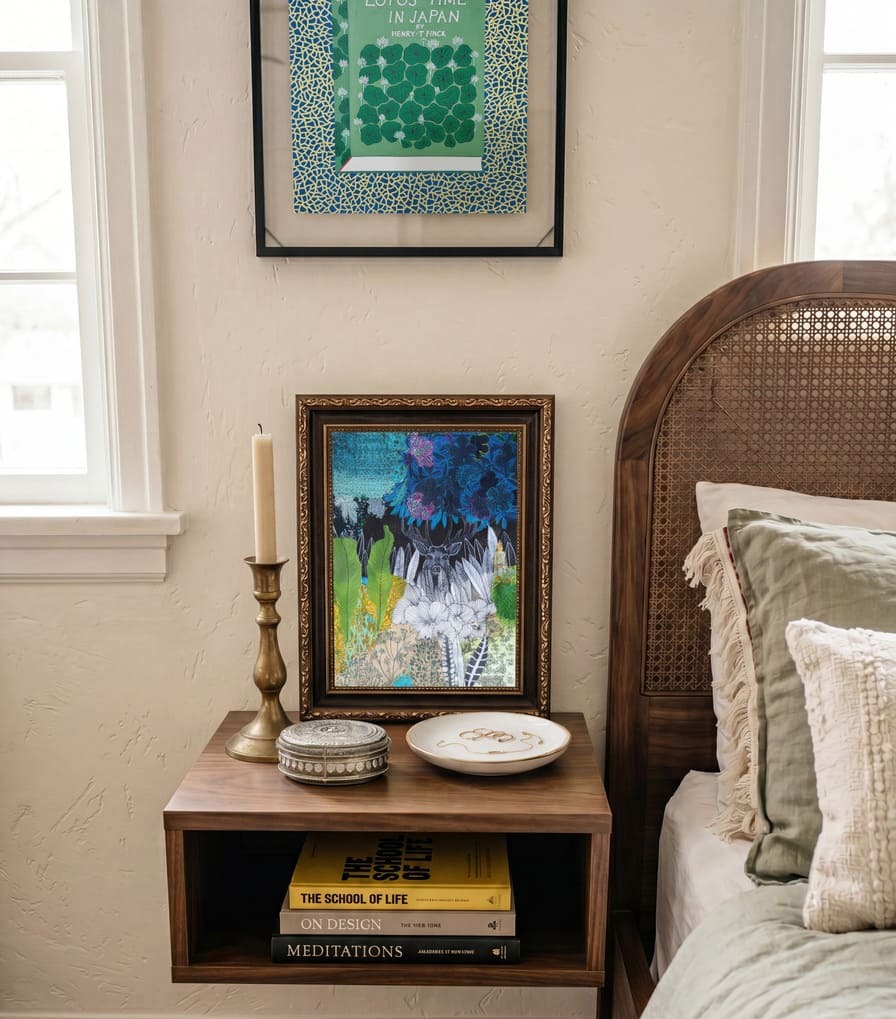
On a nightstand or dresser surface, art often works best when it is leaned rather than hung. This creates a more relaxed, collected feeling and allows the piece to be changed or adjusted over time.
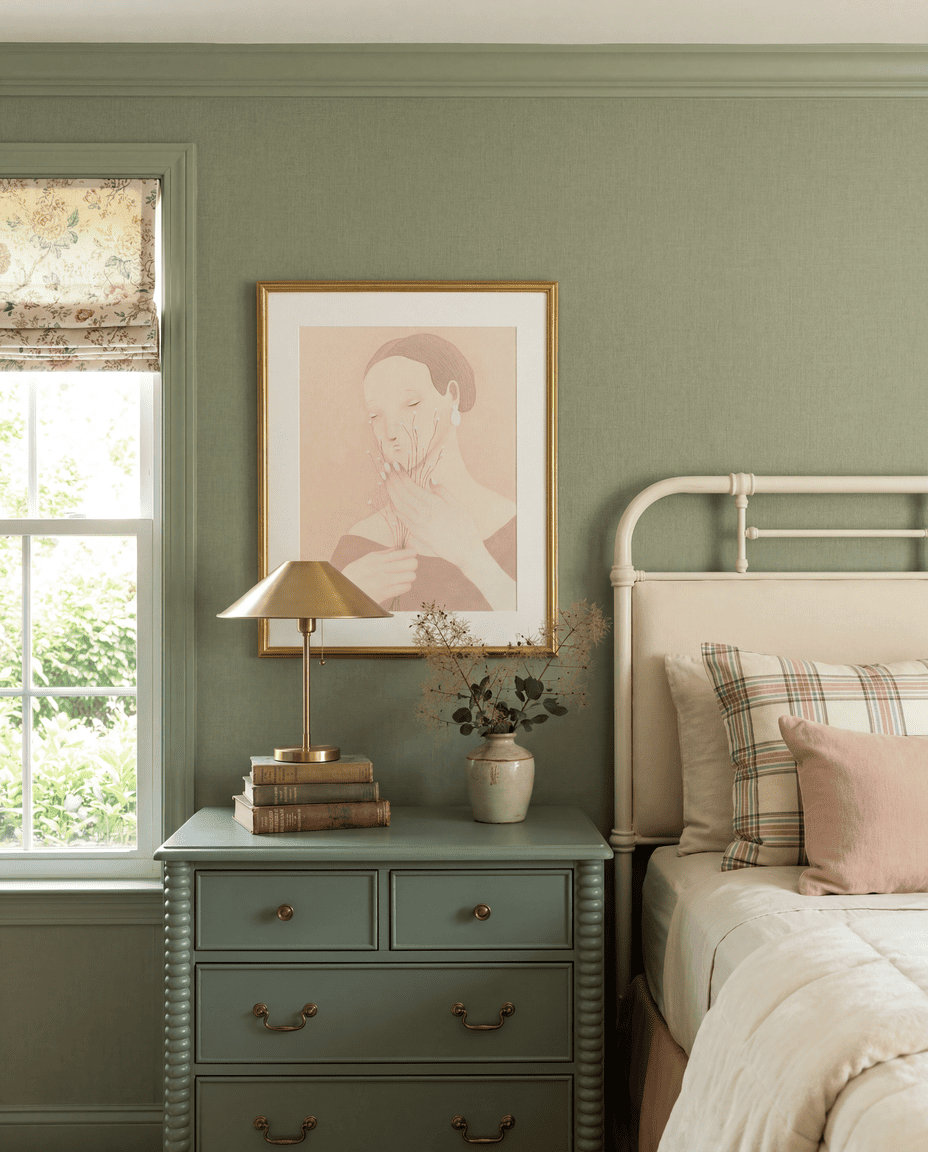
Above a nightstand, art is seen at very close range—often while lying down or sitting beside the bed. Smaller pieces, works on paper, or quieter compositions tend to feel most appropriate here.
Above a dresser, there is often room for either a single small focal point or a more layered arrangement of works. This is one of the few places in the home where smaller pieces can comfortably become the primary visual moment.
Choosing the Right Scale and Layout for Bedroom Art
Scale in the bedroom behaves differently from shared spaces. Because the room is experienced in stillness and at close range, artwork doesn’t need to compete for attention; rather, it needs to feel integrated into the environment.
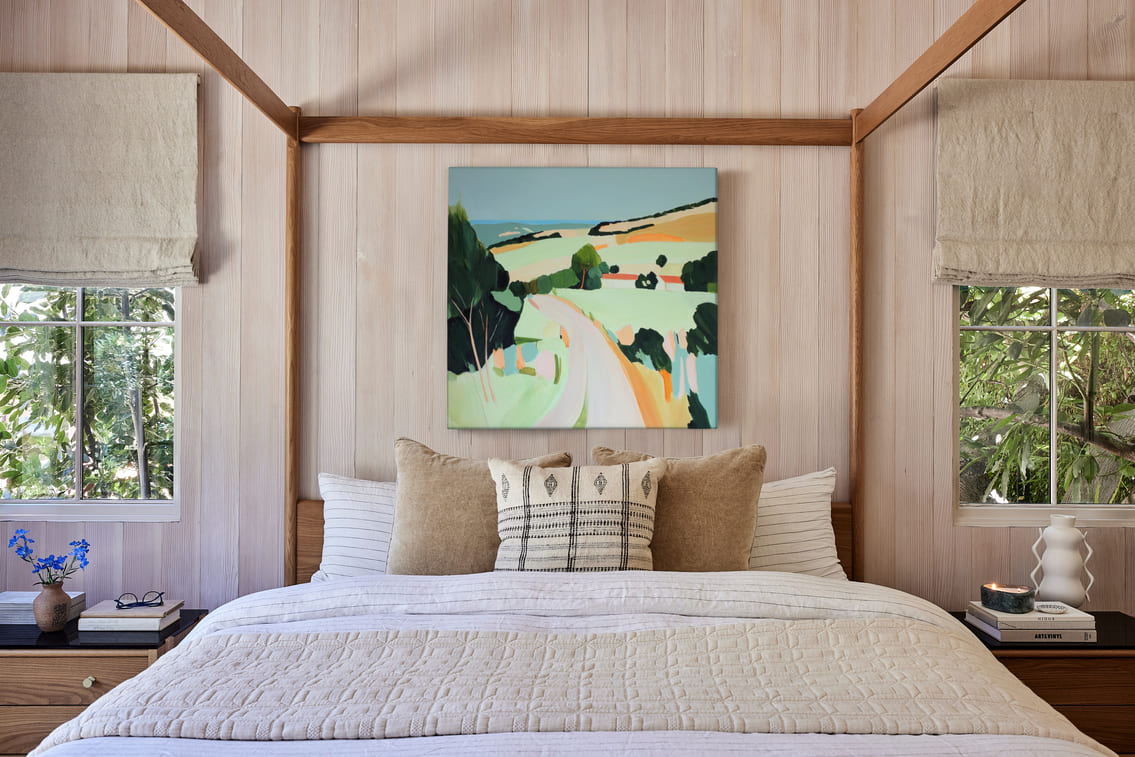
The Statement Piece
A single work above the bed is often the most straightforward approach to bedroom art. It creates a clear focal point while still maintaining a sense of calm and simplicity.
Choose a single statement work when:
For sizing, aim for the piece to span roughly two-thirds to three-quarters of the headboard’s width. That keeps it visually tied to the bed below without crowding the wall. The most common misstep here is going too small—a piece that’s underscaled above the bed floats and reads as an afterthought.
The Diptych and Triptych
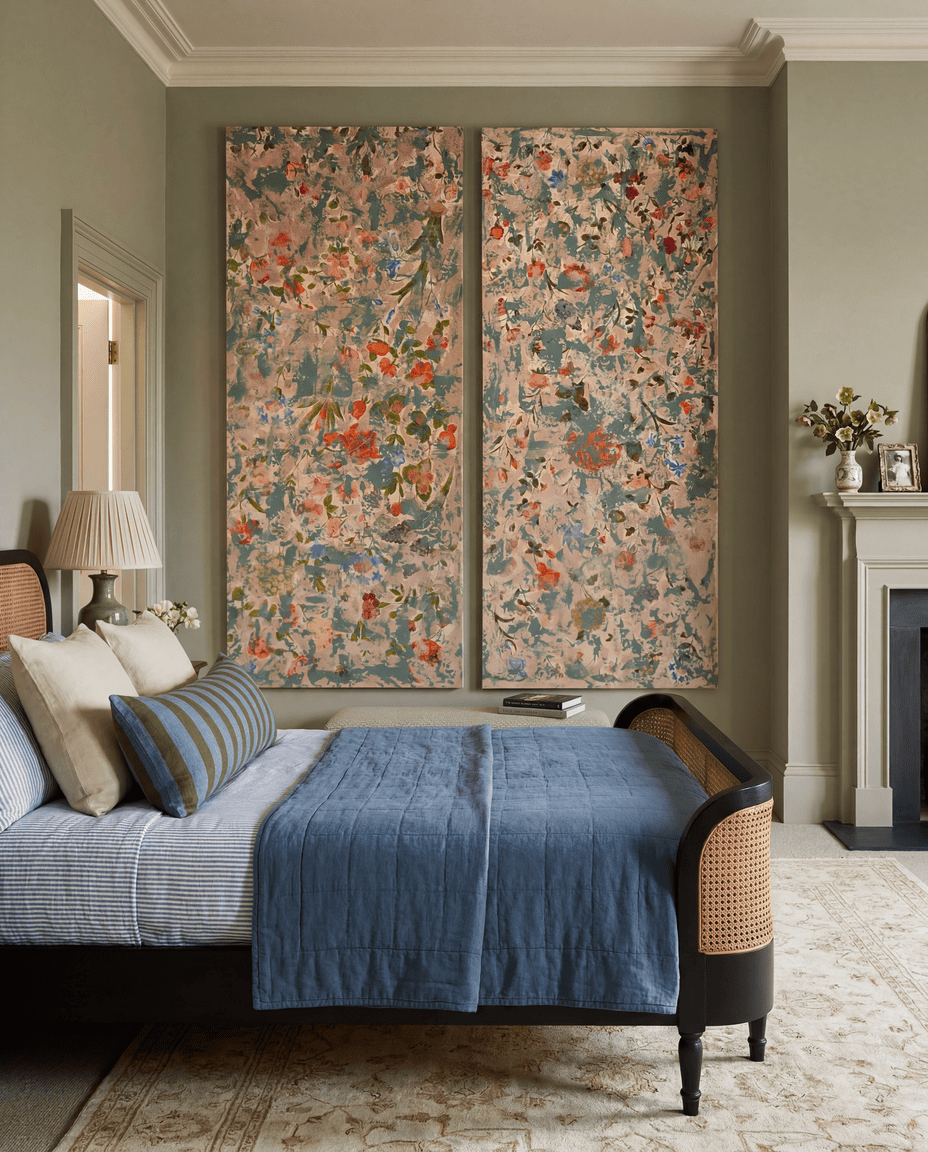
A diptych is an artwork arrangement in two parts; a triptych, three. Connected by color, subject, or style, artists intend them to be read as a single artwork when placed side by side. They offer scale with a more layered presence than a single large piece.
They work well when:
How they read visually depends on spacing. Tighter spacing (1–2 inches) makes the works feel closer to a continuous image, while wider spacing (3–4 inches) allows each piece to remain distinct while still working as a set.
If you’re pulling pieces together yourself rather than buying a ready-made set, a shared palette, related subject, or a single artist’s hand is what makes a grouping feel intentional.
The Intimate Single
The bedroom is a perfect place where a smaller work can carry presence.
A small, single piece of art makes sense when:
At close range, material is what carries the work: the surface texture, the grain of the paper, the marks of the brush, the small details you’d never catch from across a room all become part of the experience.
Hanging Art in the Bedroom
With the piece and its spot chosen, the rest is practical: picking the right height and ensuring it is settled before you commit to the nail in the wall.
Height
Above the bed, a good rule of thumb is 8 to 10 inches above the headboard. This creates a connected visual relationship between the bed and the art without separating them into distinct zones.
Elsewhere in the bedroom, art is often best experienced at eye level or slightly lower, since many viewing moments happen while seated or lying down. Rather than prioritizing wall height, the goal is to keep the work visually accessible in the way the room is actually used.
Alignment
Above the bed, artwork should be centered relative to the headboard, with the bed as the primary anchor. For a diptych or triptych, treat the entire grouping as a single unit and center it above the bed.
Above dressers or nightstands, symmetry works, but an off-center arrangement can feel more relaxed than a perfectly measured one.
Installation
The painter’s tape method will help you decide where a piece should live in the bedroom. Cut paper or tape to the size of the work, position the outline on the wall, and live with it for a day or two before committing to any holes in the wall. Paper templates are especially useful for multi-piece arrangements.
And in the more relaxed corners of the room, you can skip the wall entirely. Try leaning art on a surface, which suits the relaxed mood of a bedroom and keeps things easy to change.
Art Styles and Mediums That Work in the Bedroom
While your bedroom can—and should—hold whatever art you love, a few art styles tend to work better for creating a sense of calm.
Flora and Botanicals
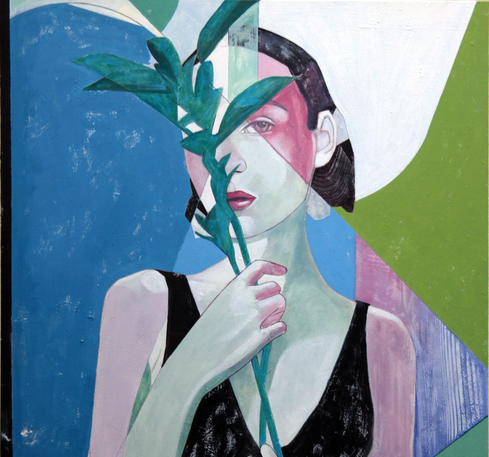
Bringing nature indoors has a calming effect—it’s the whole premise of what designers call biophilic design—and botanical art delivers it without a windowsill or any upkeep.
As a category, florals and botanicals are broad. They run from precise studies to loose painterly florals, to simple line drawings and pressed or printed specimens. A tight study reads as focused and considered; a looser floral feels softer and more open. Medium shifts it again. A painted botanical brings depth and texture, while a photographic one stays cooler and more pared-back.

Dreamy Landscapes
Soft, atmospheric landscapes are one of the most effective choices for the bedroom because they introduce depth without visual urgency. Think hazy coastlines, open fields, fog, distant horizons. The appeal is the openness they bring to a smaller room; the eye travels into the image rather than getting caught up in details.
A sharp, high-contrast landscape may be stunning, but it tends to wake a room up rather than settle it, so it’s worth being deliberate about where it goes.
Soft Abstraction
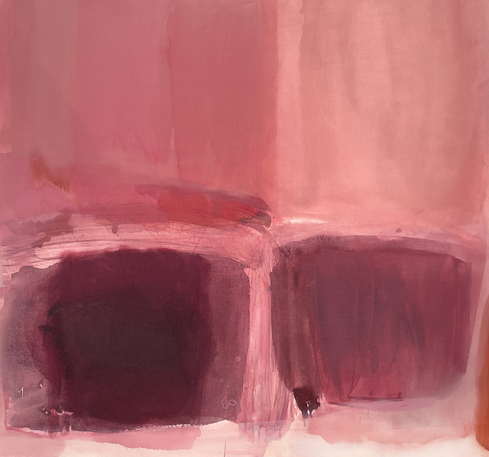
Soft abstraction tends to share a few traits: muted or tonal color, low contrast, gentle movement, and plenty of open, unworked space. Without a sharp focal point or busy detail to lock onto, the eye drifts across the surface rather than snapping to one spot, which makes the work feel restful.
It takes a few recognizable forms: color-field washes, where broad areas of close-toned color bleed into one another; soft gestural painting, where the brushwork is loose and unhurried; and minimal compositions built mostly from negative space. At its calmest, abstraction like this reads almost like atmosphere—color and texture you settle into rather than a subject you study.
Shop Art for the Bedroom
Explore original paintings, photography, and works on paper designed to bring calm, clarity, and atmosphere into the most personal room in the home.